What comes in the box? Answering accessory and bundle questions on WhatsApp
A practical Salla-store checklist for answering what is included, what is sold separately, and what still needs checking before a shopper pays.
Posted by
 TajirTalk Team
Related reading
Is the more expensive one worth it? Comparing products on WhatsApp before a sale
Help Salla shoppers choose between two products: ask what matters, compare verified differences, explain when the cheaper option fits, and hand off missing facts.
Can I return it after opening? Answering pre-purchase return questions on WhatsApp
Help a Salla shopper understand the relevant return policy before buying: clarify what opened means, check the exact item, and hand off exceptions without promising a refund.
“Will this fit my device?” Answering product compatibility questions on WhatsApp
Ask for the exact model, check the selected product option, and give a supported answer before sharing a purchase link. Includes a fictional phone-case example.
How should you answer “Does it come with the adapter?”
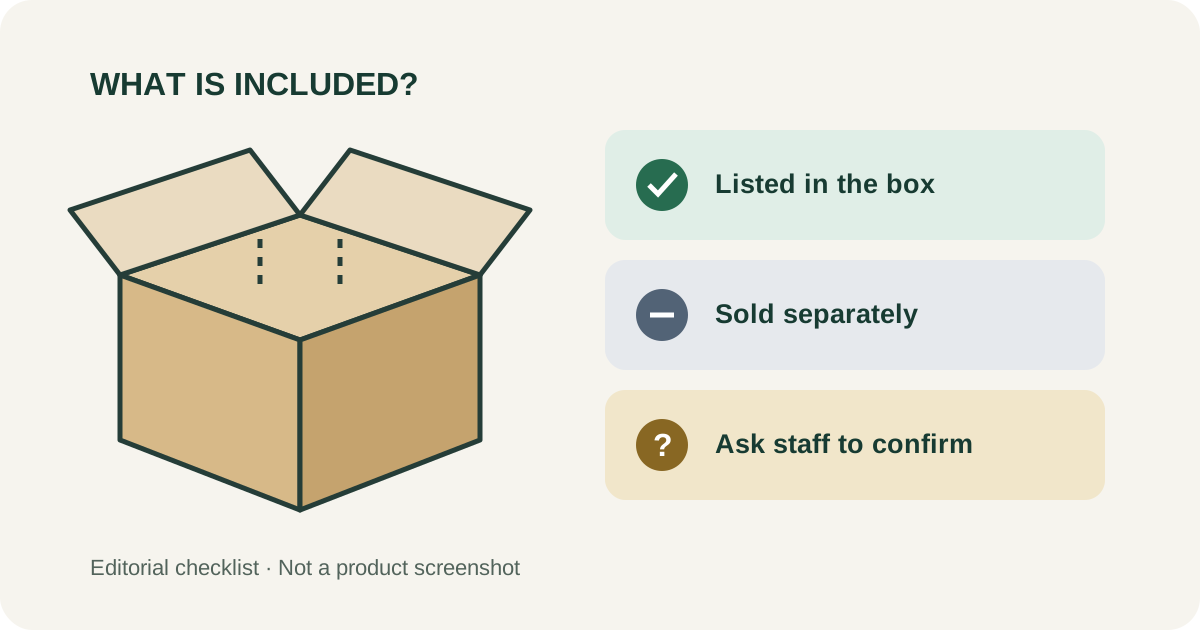
Check the exact product and selected option, then answer from its stated package contents. Name the included item precisely. If the listing says “USB cable,” that does not establish that a wall adapter is included. If the source is unclear, say what you can confirm and ask staff about the missing fact before the customer pays.
This question is about what the customer will receive, not whether two products are compatible. A correct compatibility answer can still lead to disappointment if the shopper assumes a pictured accessory is in the box. Keep “included,” “sold separately,” and “not yet confirmed” visibly separate.
Identify the option before listing its contents
Ask for the product link and the selected option or bundle name. A single item, a gift set, and a refill pack can share similar images while containing different items. Do not copy the contents of one option into an answer about another.
| Source says | You can answer | Do not infer |
|---|---|---|
| Included | The exact named item and quantity listed for that option. | That every prop or accessory in the photograph is supplied. |
| Sold separately | The accessory is not part of that offer; share its verified link if helpful. | That a suggested accessory is compatible without checking. |
| Not specified | The source does not confirm it; staff need to check. | That absence from the description proves absence from the box. |
Apply the same distinction to a coffee brewer and its filters, a toy and its batteries, or a gift set and its wrapping. Name the part rather than saying “all accessories.” When quantities matter, use the documented count and unit: two cups is not the same as a two-piece set containing a cup and lid.
Fictional example: a desk lamp, a cable, and an unanswered question
This is an invented teaching example, not a real listing, customer conversation, or recorded TajirTalk output.
Shopper: “Does the lamp come with the charger, or do I need to buy one?”
Product information: The selected option lists one desk lamp and one USB cable. It does not mention a wall adapter. The hero image also shows a phone and a notebook as props.
Useful reply: “For this option, the listing confirms the lamp and a USB cable. It does not confirm a wall adapter, so I will ask our team to check that before you order. The phone and notebook in the photo are props, not listed package contents.”
Why it works: The answer separates a known fact from an open question. It does not call a cable a charger, invent an adapter specification, or pressure the shopper to buy an extra item.
Prepare the product facts TajirTalk can use
TajirTalk's product-answer flow searches connected store product data. Its knowledge area also supports merchant-written FAQs. These are sources to prepare, not a physical inspection of your inventory. Confirm the correct Salla store is connected and the relevant product information is available before relying on an answer.
- Put an explicit package-contents list in the exact product or option description, using the supplier's confirmed information.
- State separately sold essentials clearly. Do not put an accessory in both the included and excluded lists.
- Use a FAQ for a recurring explanation, such as the difference between a cable and a power adapter. Keep changing offer details with the product rather than in a stale general answer.
- When you change a bundle, check that the product information used by the agent reflects the new contents before testing again.
Test one normal case and two awkward ones
Choose a product people ask about and test the same question in Arabic and English. Confirm that the answer names the selected option, lists only supported contents, and gives a useful next step.
- Clear list: Does the answer distinguish included parts from separately sold accessories?
- Missing detail: Does it admit that the adapter or battery is unspecified rather than guessing yes or no?
- Conflicting bundle: Does it stop when the title and description disagree instead of choosing whichever source sounds more complete?
Review the conversation and use the human-handoff workflow when a staff member needs to confirm a fact. Pause AI replies while staff handle the exception. This is a workflow you configure and test, not a guarantee that every ambiguous question will be caught automatically.
When reviewing results, look for questions answered correctly and discrepancies you resolved in the catalog. A reply or accessory-link click is not a sale; use verified order outcomes if you later assess commercial impact.
View TajirTalk on Salla Check current plans and setup requirements before installing.
Related: prepare product knowledge and answer compatibility questions.
